OncoMate® Microsatellite Instability (MSI) Detection Kit
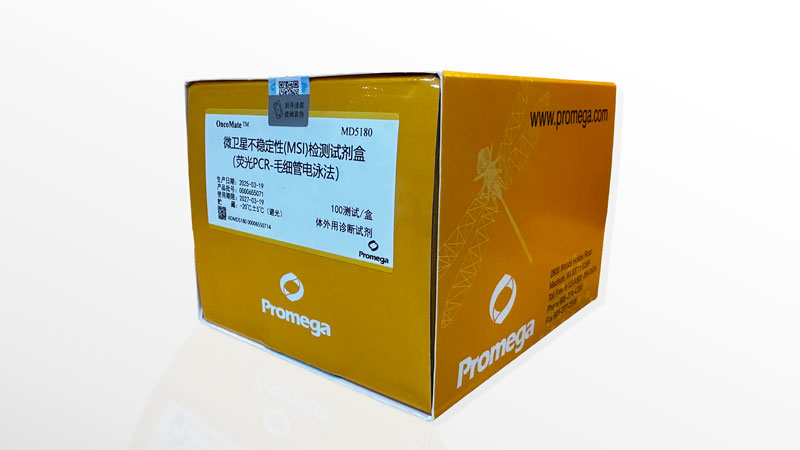
NMPA-Approved Companion Diagnostic in China. The OncoMate® Microsatellite Instability (MSI) Detection Kit is indicated for use as a companion diagnostic test to identify MSI-H solid tumor patients who may benefit from KEYTRUDA® (pembrolizumab), Merck’s anti-PD-1 therapy.
- IVD for Microsatellite Instability Characterization
- Fragment sizing test used to determine MSI status with gold-standard microsatellite markers
- NMPA-approved MSI-by-PCR test in China for companion diagnostic use in solid tumors
- Globally available MSI test: FDA-approved in the US for companion diagnostic use for endometrial carcinoma; FDA-cleared for colorectal cancer, aiding in Lynch Syndrome detection; CE-marked in EU and available in select European countries

Catalog Number:
Size
Catalog Number: MD5180
Accurately Determine MSI Status Using the Gold Standard Method
The OncoMate® Microsatellite Instability (MSI) Detection Kit is a fluorescent, multiplex PCR-based test to detect microsatellite instability (MSI) status. MSI is a form of genomic instability caused by the deletion of repeating bases within microsatellites during DNA replication due to the failure of the mismatch repair system (MMR) to correct these errors. The OncoMate® Microsatellite Instability (MSI) Detection Kit is designed to provide physicians with a functional, molecular measurement of the level of DNA mismatch repair deficiency demonstrated within their patient's tumor.
NMPA-Approved Companion Diagnostic in China. The OncoMate® Microsatellite Instability (MSI) Detection Kit is indicated for use as a companion diagnostic test to identify MSI-H solid tumor patients who may benefit from KEYTRUDA® (pembrolizumab), Merck’s anti-PD-1 therapy.
MSI Testing Empowers Precision Medicine Through Actionable Insight
Inform Effective Immunotherapy Decisions with MSI
Testing solid tumors for microsatellite instability (MSI) provides critical molecular insight into both the cancer and its surrounding microenvironment, helping clinicians guide therapy selection. MSI-H tumors with unrepaired microsatellite sequences generate neoantigens and promote lymphocyte infiltration, but some evade immune activity through PD-L1 expression. Immune checkpoint inhibitors (ICIs) block these suppressive pathways, restoring antitumor responses (1–4).
Performance and Methodology To Meet Clinical Demands
For Informing Therapy Decisions in Solid Tumors
Only Two Sections Required

From FFPE tumor samples and blood or FFPE normal samples. Tumor sample should have ≥30% viable tumor cells.
Minimal DNA Required

Uses only 1ng of amplification-quality DNA per reaction.
Assay Time Under 3 Hours

Quick, multiplexed reaction, balanced for accuracy and efficiency, goes from DNA to answer in as little as 2.5 hours.
Sensitive and Specific Results

Reliable MSI determination in 2625 solid tumor cases with strong agreement to the comparator.
Sensitive Panel of Mononucleotide Repeat Markers
The OncoMate® Microsatellite Instability (MSI) Detection Kit targets five mononucleotide repeat markers (BAT-25, BAT-26, NR-21, NR-24 and MONO-27) that were selected for high sensitivity and specificity to alterations in repeat lengths in samples containing mismatch repair defects (5,6). For quality control and sample authentication of matched tumor and normal samples, the system uses two pentanucleotide repeat markers (Penta C and Penta D) that were selected for their high level of polymorphism and lower degree of MSI.
Test Design and Marker Information
Target Markers
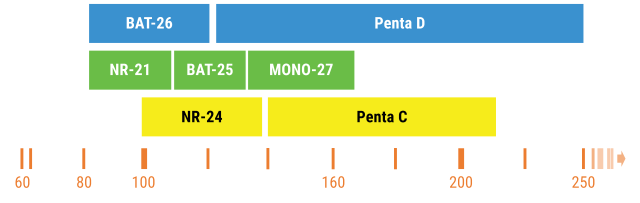
NCI-recommended, Revised Bethesda Panel and two pentanucleotide markers (7).
Example Data
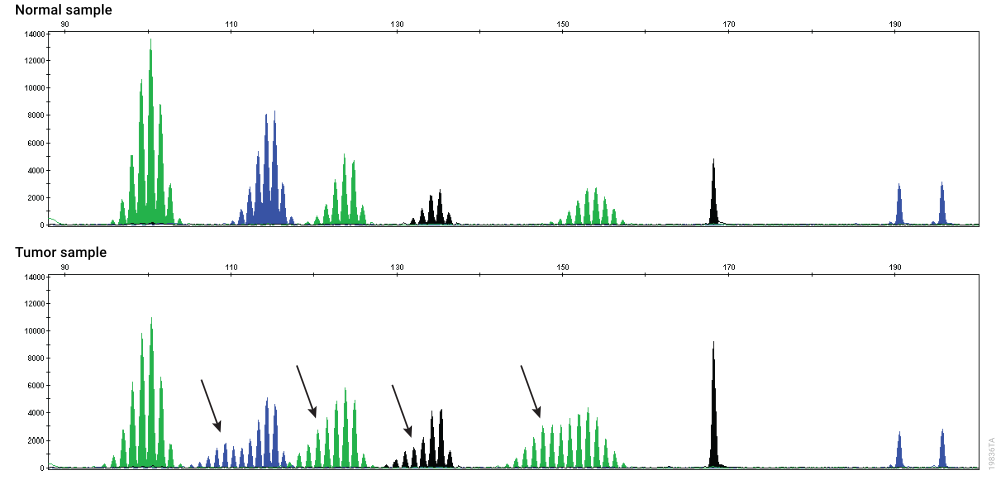
Instability is determined by fragment size analysis on a capillary electrophoresis instrument following PCR amplification of DNA from a patient's normal and tumor tissue samples. Unstable loci in the tumor tissue are indicated by arrows.
Sample to Answer Overnight
Solid Tumor
The OncoMate® Microsatellite Instability (MSI) Detection Kit for use as a companion diagnostic is part of a broader workflow that includes DNA extraction from FFPE tissue samples, quantitation of DNA, amplification of specific microsatellite markers using multiplex PCR, fragment separation by capillary electrophoresis, and data analysis and interpretation.

Isolate DNA
from FFPE tumor samples and blood or FFPE normal samples using nucleic acid extraction reagents and instruments

Quantitate DNA
using fluorescent DNA quantitation reagents and instruments

Amplify DNA
using the OncoMate® Microsatellite Instability (MSI) Detection Kit

Separate and Detect Fragments
using a capillary electrophoresis instrument capable of fluorescent detection

Data Analysis and Reporting
using fragment analysis software

Turnaround Time:
In as little as 10 hours or overnight
Intended Use Statement:
This kit is intended for the in vitro qualitative detection of microsatellite instability (MSI) status in DNA from formalin-fixed paraffin-embedded (FFPE) tissue samples of solid tumor patients. MSI status is determined by analyzing 5 microsatellite loci (BAT-26, NR-21, BAT-25, MONO-27, NR-24) through comparing the fragment size changes of each locus between normal tissue or whole blood and cancer tissue. It is intended as a companion diagnostic to assist in identifying solid tumor patients eligible for treatment with pembrolizumab injection (KEYTRUDA®).
Important MSI publications for MSI-H Solid Tumors and Immune Checkpoint Inhibitors
MSI is a well-accepted, predictive, tissue-agnostic biomarker that predict response to immune checkpoint inhibitors (ICIs). Since MSI can affect a wide range of genes, it can lead to an increase in mutations and development of neoantigens. Because of this, MSI-H tumors typically show high levels of immune cell infiltration and, conversely, MSS tumors usually have low infiltration. ICIs and combination therapies work within the tumor environment to encourage the immune system to combat the cancer more effectively.
Baretti, M. and Le, D.T. (2018) DNA mismatch repair in cancer. Pharmacol. Ther. 189, 45–62.
Johannet, P. et al. (2025) Therapeutic targeting of mismatch repair-deficient cancers. Nat. Rev. Clin. Oncol. 22(10) , 734–59.
Le, D.T. et al. (2017) Mismatch repair deficiency predicts response of solid tumors to PD-1 blockade. Science 357, 409–13.
André, T. et al. (2023) Antitumor activity and safety of dostarlimab monotherapy in patients with mismatch repair deficient solid tumors: A nonrandomized controlled trial. JAMA Netw Open 6(11), e2341165.
Wu, X. et al. (2025) Pembrolizumab in patients of Chinese descent with microsatellite instability-high/mismatch repair deficient advanced solid tumors: KEYNOTE-158 Final Analysis. Adv. Ther. 42, 2480–9.
Marabelle, A. et al. (2025) Pembrolizumab in microsatellite-instability-high and mismatch-repair-deficient advanced solid tumors: Updated results of the KEYNOTE-158 Trial. Nature Cancer 6(2), 253–8.
References
- Baretti, M. and Le, D.T. (2018) DNA mismatch repair in cancer. Pharmacol. Ther. 189, 45–62.
- Johannet, P. et al. (2025) Therapeutic targeting of mismatch repair-deficient cancers. Nat. Rev. Clin. Oncol. 22(10), 734–59.
- Marabelle, A. et al. (2025) Pembrolizumab in microsatellite-instability-high and mismatch-repair-deficient advanced solid tumors: Updated results of the KEYNOTE-158 Trial. Nature Cancer 6, 253–8.
- Wu, X. et al. (2025) Pembrolizumab in patients of Chinese descent with microsatellite instability-high/mismatch repair deficient advanced solid tumors: KEYNOTE-158 Final Analysis. Adv. Ther. 42, 2480–9.
- Bacher, J. et al. (2004) Development of a fluorescent multiplex assay for detection of MSI-High tumors. Dis. Markers 20, 237.
- Luchini, C. et al. (2019) ESMO recommendations on microsatellite instability testing for immunotherapy in cancer, and its relationship with PD-1/PD-L1 expression and tumour mutational burden: a systematic review-based approach. Annals of Oncology 30, 1232.
- Umar, A. et al. (2004) Revised Bethesda Guidelines for hereditary nonpolyposis colorectal cancer (Lynch syndrome) and microsatellite instability. J. Natl. Cancer Inst. 96, 261–8.
KEYTRUDA® is a registered trademark of Merck Sharp & Dohme LLC, a subsidiary of Merck & Co., Inc., Rahway, NJ, USA.

Medical Information
If you need assistance or access to medical information and resources, our Medical Affairs scientists are ready to help.
Protocols
Specifications
Catalog Number:
What's in the box?
| Item | Part # | Size | Concentration |
|---|---|---|---|
OncoMate® 5X MSI Primer Mix |
CA890 | 1 × 200μl | |
OncoMate® 5X MSI Master Mix |
CA891 | 1 × 200μl | |
Nuclease-Free Water |
CA892 | 1 × 1250μl | |
2800M Control DNA |
CA893 | 1 × 25μl | 10ng/μl |
Size Standard 500 |
CA894 | 1 × 100μl |
SDS
Search for SDSCertificate of Analysis
Use Restrictions
For In Vitro Diagnostic Use. This product is only available in certain countries.Storage Conditions

Related Products
Frequently Used With
Maxwell® CSC DNA FFPE Kit
Isolates DNA from FFPE samples for in vitro diagnostic assays using the Maxwell® CSC Instrument.
AS1350
Maxwell® CSC Blood DNA Kit
Isolates DNA from blood for in vitro diagnostic assays using the Maxwell® CSC Instrument.
AS1321
Maxwell® CSC Instrument
Benchtop instrument for automated nucleic acid purification from a range of clinical sample types. For In Vitro Diagnostic Use.
AS6000
Maxwell® CSC 48 Instrument
Benchtop instrument for automated nucleic acid purification from a range of clinical sample types. For In Vitro Diagnostic Use.
AS8000