How to Measure Compound Permeability and Target Affinity
Our technologies can help you evaluate cellular permeability and affinity for target proteins and E3 ligases, which is fundamental to the successful development of degrader compounds.
- NanoBRET® Target Engagement Assays measure protein-small molecule interactions in live cells
- Lumit® Immunossays provide a high-throughput biochemical method to measure interactions in solution
Learn how to assess compound cell permeability and affinity to E3 ligases using NanoBRET® Target Engagement Assays.

How Do You Measure Cellular Permeability and Target Affinity in Live Cells?
Measure Cellular Interactions in Live Cells with NanoBRET® Target Engagement Assays
When developing degrader compounds, it is important to assess their cellular permeability and affinity for target proteins and E3 ligases. NanoBRET® Target Engagement (TE) technology measures protein-small molecule binding interactions in live cells, providing quantitative data on compound permeability, target affinity and residence time. We provide assays available for multiple target classes important in drug discovery, including kinases, histone deacetylases (HDAC), bromodomains and E3 ligases.
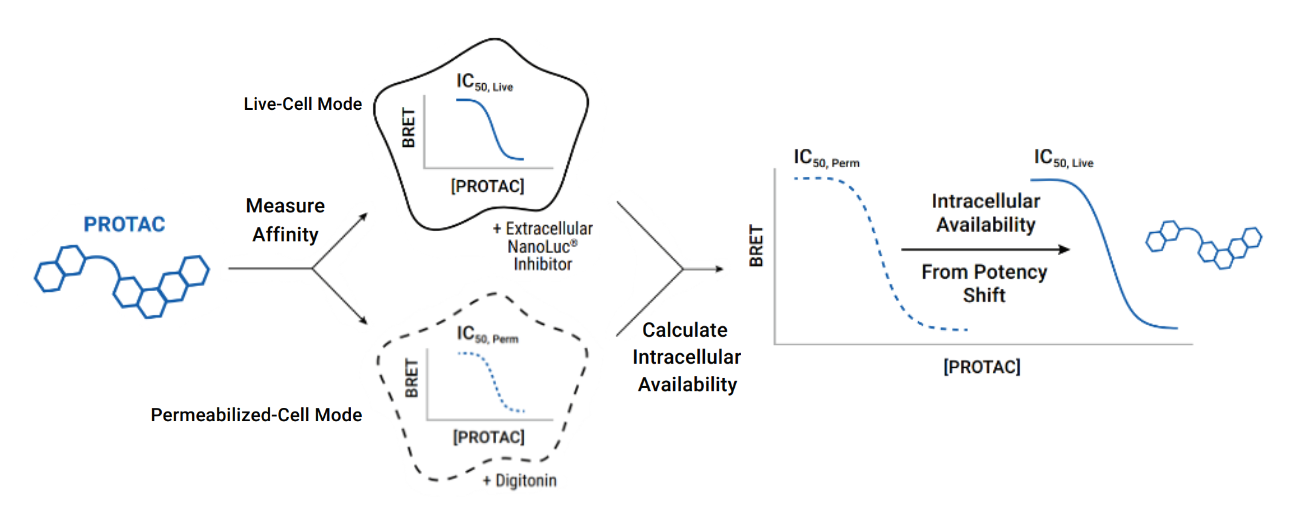
The NanoBRET® TE Intracellular E3 Ligase Assays allow live cell measurement of degrader compound affinity for E3 ubiquitin ligase proteins, Cereblon (CRBN) or von Hippel-Lindau disease tumor suppressor (VHL). The assay can be performed in live or permeabilized cells, which allows the user to assess both compound affinity for the E3 ligase and compound permeability in the same system.
Interested in NanoBRET® TE Assays for other E3 ligase, including cIAP1, cIAP2, XIAP and MDM2?
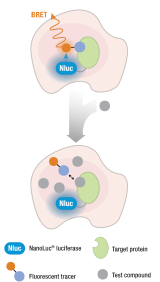
Principle of the NanoBRET® Target Engagement
Measuring Cellular Affinity
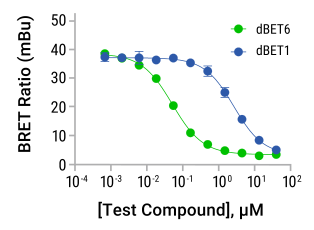
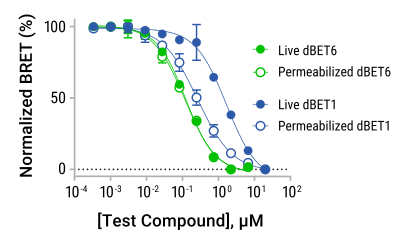
Measuring cellular affinity of BET degraders targeting BRD4 using the NanoBRET® TE Assay. Comparison of cellular binding affinity for two related PROTACs that target BRD4 (left panel) using a BRD4 NanoBRET® TE Assay. Degrader affinity for the E3 ligase CRBN was compared in live and permeabilized cells using a NanoBRET® TE CRBN Assay to assess contribution of compound permeability to measured binding affinity (right panel). The study revealed that dBET6 is more permeable than dBET1 and dBET6 has slightly higher affinity for CRBN compared to dBET1.
Quantifying Intracellular Availability
How Do You Biochemically Measure Target Affinity?
Measure Protein-Small Molecule Interaction with Lumit® Immunoassays
Lumit® Immunoassays provide a biochemical method to monitor binary interactions between small molecules and target proteins. These assays use streptavidin and antibodies that recognize commonly used protein tags coupled with NanoLuc® Technology. The simple add-and- read protocol make them suitable for multiplexing and high- throughput screens.
Measuring Molecular Glue Interactions
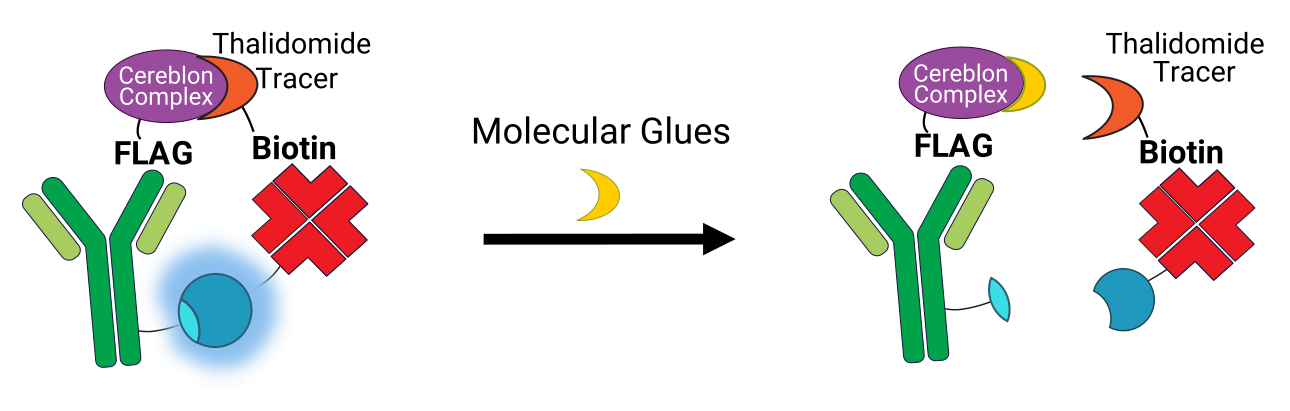
Schematic overview of using Lumit® Immunoassays to measure interactions between molecular glues and cereblon complex.
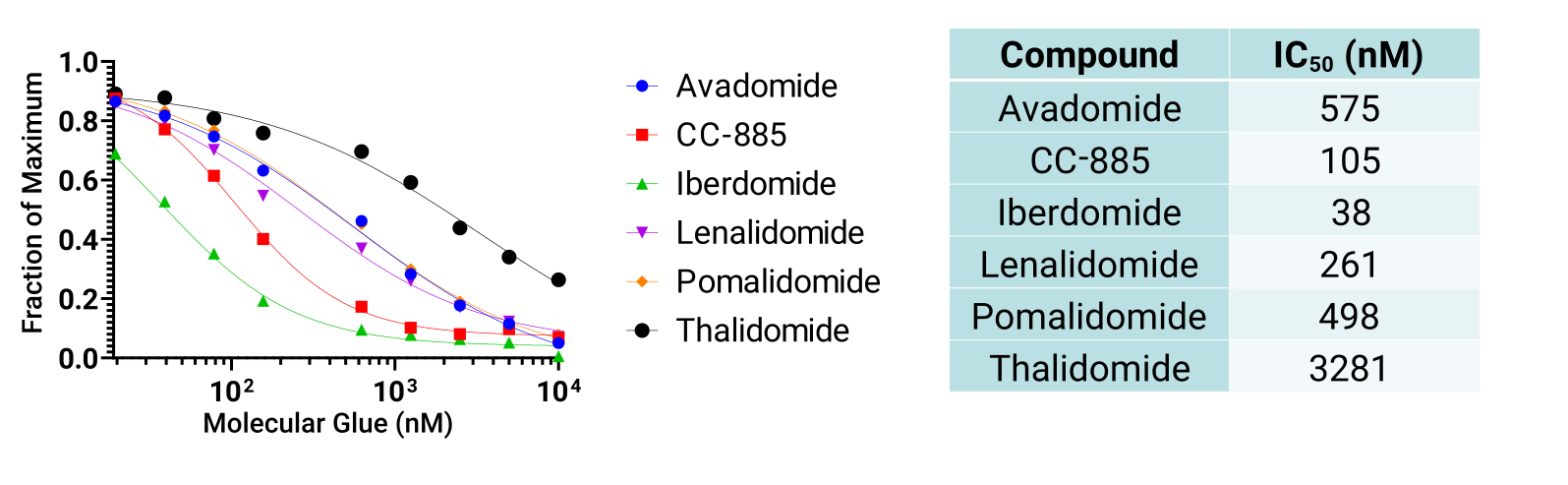
Molecular glue interactions with cereblon complex. To determine the relative affinities of molecular glues, we titrated them into a cereblon-thalidomide tracer complex. As the tracer is competed off, the luminescent signal decreases. Relative IC50 values correlate to target engagement assays in lysed cells. Download poster to see more data or contact us for more information.
Need help with Assessing Cellular Permeability?
Learn more about our targeted protein degradation services.